Contact: 044-2688 0235 / 0702 / 0790

Magnetic Particle Testing

Magnetic Particle Inspection (MPI) is a highly effective non-destructive testing method

Overview of the service

MAGNETIC PARTICLE TESTING

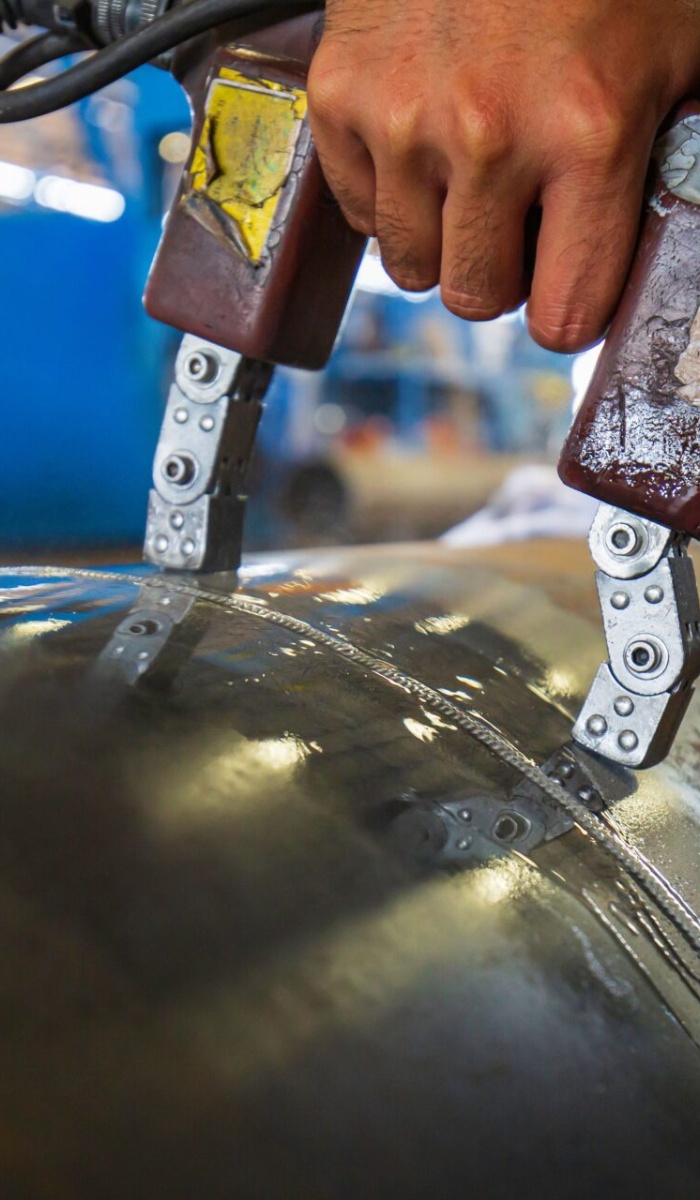
Magnetic particle inspection (MPI) is a non-destructive testing (NDT) process for detecting surface and slightly subsurface discontinuities in ferroelectric materials such as iron, nickel, cobalt, and some of their alloys. The process puts a magnetic field into the part. The piece can be magnetized by direct or indirect magnetization.

Direct magnetization occurs when the electric current is passed through the test object and a magnetic field is formed in the material. Indirect magnetization occurs when no electric current is passed through the test object, but a magnetic field is applied from an outside source. The magnetic lines of force are perpendicular to the direction of the electric current which may be either alternating current (AC) or some form of direct current (DC) (rectified AC).

The presence of a surface or subsurface discontinuity in the material allows the magnetic flux to leak, since air cannot support as much magnetic field per unit volume as metals. Ferrous iron particles are then applied to the part.

The particles may be dry or in a wet suspension. If an area of flux leakage is present the particles will be attracted to this area.

Where It Is Used

This inspection method is ideal for identifying defects in:

Pipelines and Pressure Vessels

Critical systems used for transporting fluids and gases under high pressure, requiring strict inspection for safety and integrity.

Weld Joints and Fabrication Structures

Engineered connections and assemblies where material strength and defect-free bonding are essential for structural reliability.

Automotive and Heavy Machinery Components

High-performance parts subjected to continuous stress and load, demanding precise quality checks to ensure durability.

Casting and Forging Parts

Metal components formed through casting or forging processes, where internal and surface defects must be carefully evaluated.

Inspection Process

The inspection process follows a systematic step-by-step approach to ensure
accurate detection of even the smallest surface defects.

Surface Preparation

Cleaning the surface to remove dirt, oil, or contaminants

Magnetization

Applying a magnetic field to the component using direct or indirect methods to create magnetic flux.

Application of Magnetic Particles

Sprinkling dry powder or applying wet fluorescent particles over the surface.

Indication Formation

Magnetic particles gather at leakage points, forming visible indications of defects.

Inspection & Evaluation

Examining indications under visible or UV light to identify type, size, and severity of defects.

Demagnetization & Cleaning

Removing residual magnetism and cleaning the surface after inspection.

Where It Is Applied (Application)

Key Benefits

Catch Surface Cracks Before They Become Failures